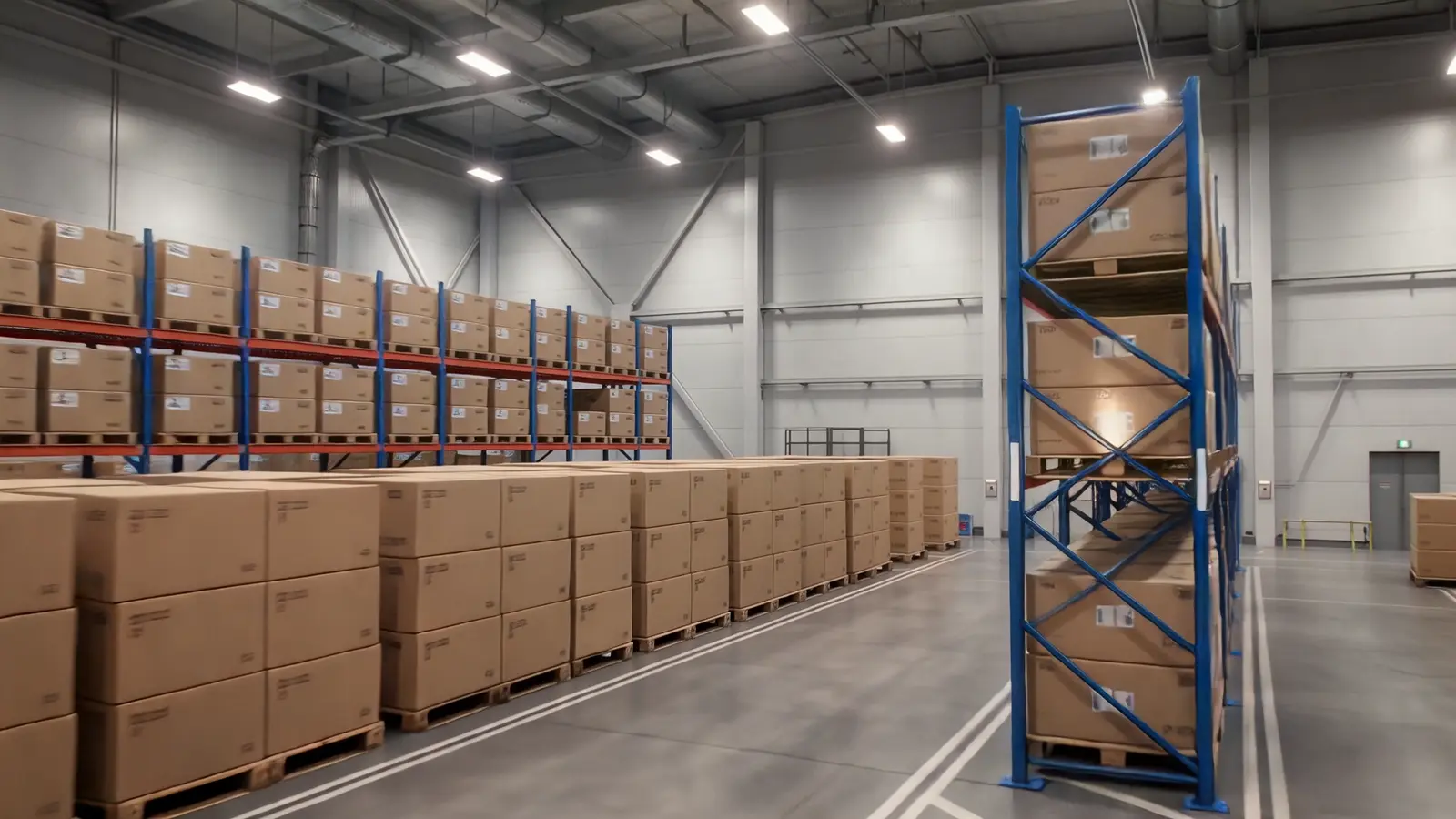
When businesses decide to buy wholesale from China, the first real question is not “which product?” but “from whom?”. The same item can be bought from the factory that makes it, from a trading company that resells it, from a stall in a wholesale market, or through an online platform. Each route has its own strengths, risks and minimum quantities. Understanding the difference helps you choose the right channel for each order instead of treating “China” as one big supplier.
The four main ways to buy wholesale products from China
1. Directly from a factory
A factory produces the goods on its own lines. Buying direct is usually the route to consider when you need:
- Custom specifications, your own branding or private label.
- Repeat orders of the same item in meaningful volumes.
- Control over materials, production details and packaging.
The trade-offs: factories often specialise in a narrow product range, may set higher minimum order quantities, and can be less flexible on small or mixed orders. Many factories also do not have staff dedicated to small export buyers, so communication can be slower.
2. Through a trading company
A trading company buys from several factories and sells to you. This is very common, and it is not a bad sign in itself. Trading companies can be useful when you:
- Need many different products in one order.
- Want one point of contact and one invoice.
- Order quantities that a factory would not accept on its own.
The trade-offs: there is an additional margin in the price, and you have less visibility into which factory actually makes the goods. If quality changes between orders, it may be because the trader switched production to a different factory.
3. At a wholesale market, such as Yiwu
Yiwu, in Zhejiang province, is known for the Yiwu International Trade City, a very large wholesale market for small commodities: household goods, accessories, toys, stationery, decorations, packaging and much more. Many stalls are showrooms for factories or trading companies, and you can see and compare products physically.
Markets work well when you:
- Want to see and touch products before deciding.
- Need a wide assortment, for example for a shop, in smaller quantities per item.
- Are testing new products before committing to larger runs.
The trade-offs: stall owners may be manufacturers or resellers, and it is not always obvious which. Quantities, prices and terms are negotiated stall by stall, and consolidating goods from many stalls into one shipment needs coordination.
4. Online platforms: Alibaba and 1688
Alibaba is aimed at international buyers, with English-language listings. 1688 is the domestic Chinese wholesale platform, in Chinese, and is generally oriented toward buyers inside China. Both list factories and trading companies side by side.
Online platforms are convenient for research and price comparison. The trade-offs: a listing does not prove that the seller is a factory, photos may not match the goods you receive, and buying on 1688 from abroad usually requires someone in China to handle payment, communication and collection.
Comparing the options
| Channel | Usually good for | Things to watch |
|---|---|---|
| Factory | Custom products, branding, repeat volume | Higher MOQ, narrow range |
| Trading company | Mixed orders, one contact | Extra margin, less visibility of production |
| Wholesale market (e.g. Yiwu) | Assortments, seeing products in person | Unclear if stall is maker or reseller, many separate deals |
| Alibaba / 1688 | Research, comparing offers | Listings need verification, 1688 needs local handling |
These are general tendencies, not rules. Some trading companies are very reliable partners; some factories accept small trial orders. What matters is checking each supplier individually.
How to tell a factory from a trading company
Suppliers will not always say clearly which one they are. A few practical checks:
- Business licence scope: a manufacturer’s licence usually lists production activities; a trader’s typically lists sales or trade.
- Product range: a supplier offering everything from kitchenware to electronics is unlikely to make all of it.
- Production questions: ask about machines, moulds, materials and capacity. A factory can answer in detail; a trader often needs to “check with the factory”.
- Visit or video: a real-time walk-through of the production floor is more convincing than catalogue photos.
A factory check by someone on the ground is the most reliable method. This is part of what our supplier and factory research service covers.
Which route is right for your order?
A simple way to decide is to start from your order rather than from the supplier:
- Many different items, smaller quantities each (for example, a shop assortment): a wholesale market or a trading company is often the practical choice.
- One or a few items, larger volume, possibly customised: look for factories that specialise in that product.
- Not sure yet: research online, shortlist a few suppliers, and order samples before deciding.
Quantity matters a lot here. Each channel has different minimums, and the price per unit usually depends on how much you buy. Our article what is MOQ explains why the same product can come with very different minimums and prices.
Practical tips before placing a wholesale order
- Prepare a written specification: materials, size, colours, packaging, labelling.
- Get quotes for the same specification from several suppliers so they can be compared.
- Ask for samples, and keep an approved sample as the reference for the order.
- Agree in writing on payment terms, production time and Incoterms.
- Plan an inspection before the goods are shipped and before the final payment.
- Get a logistics quote early, especially if goods come from several suppliers and need consolidation.
If you are new to the full process, our step-by-step guide on how to import from China covers each stage, from specification to shipping.
How TOPDANBAZ helps
Our team is based in Yiwu, close to the market and to many manufacturers in the region. We help businesses search for products, research and compare suppliers and factories, negotiate purchase terms, coordinate samples and inspections, and organise logistics. We are not a marketplace and do not sell our own catalogue; we work on the product you need. You can see the process on our how it works page.
If you are planning to buy wholesale from China and want help finding the right supplier, send us a product request with your product details and quantities.